
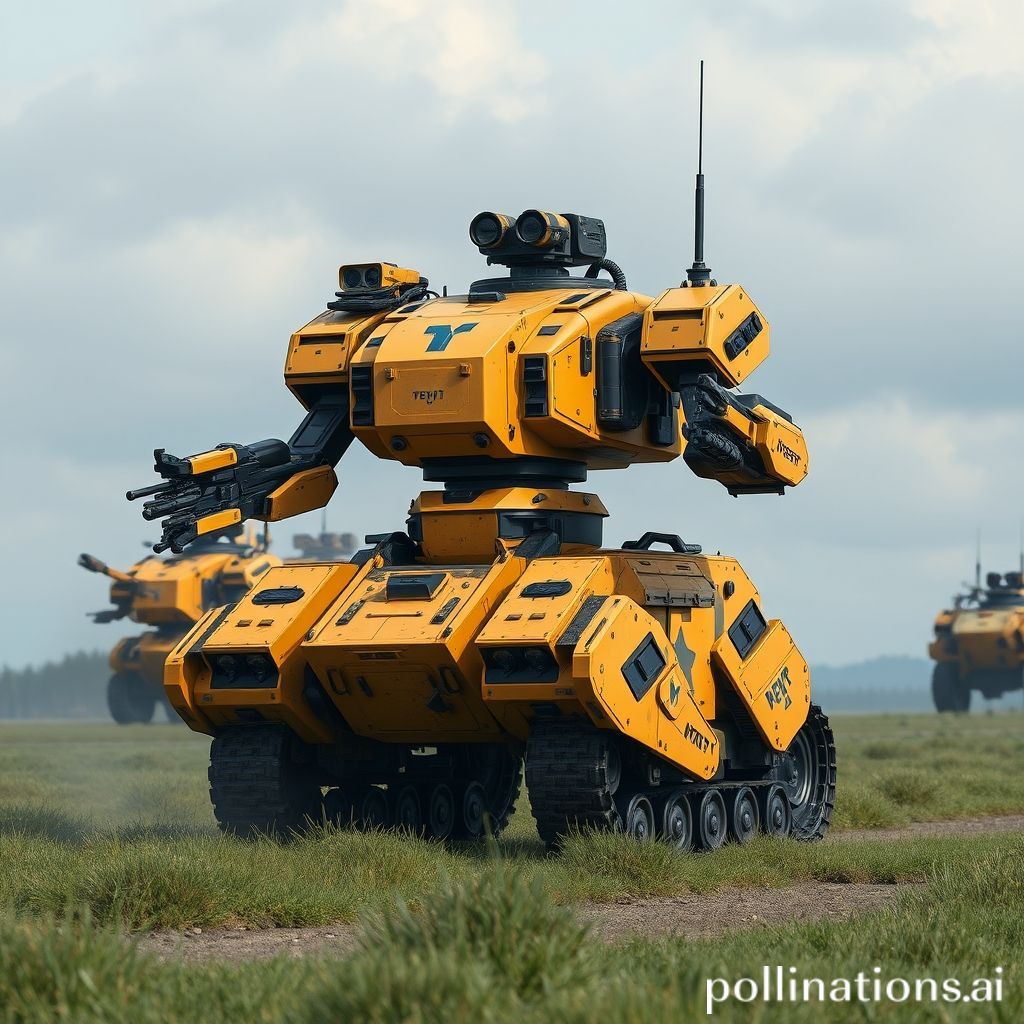
A company on Russia's doorstep that sent its war robots to Ukraine got a crash course in what soldiers need
From Factory Floor to Front Lines: How Estonia's Milrem Robotics Learned War's Brutal Lessons in Ukraine
Hey everyone, have you ever thought about what it takes to truly prepare a piece of technology for the chaos of real world combat? We often see these sleek, futuristic robots in promotional videos, effortlessly navigating simulated terrains. But what happens when they encounter the mud, the mines, and the relentless ingenuity of a battlefield?
Today, we're diving into the story of Milrem Robotics, an Estonian company sitting right on Russia's doorstep, and their experience deploying their THeMIS unmanned ground vehicles (UGVs) in Ukraine. This wasn't just a product demonstration; it was a baptism by fire, a crash course in what soldiers actually need, and a lesson in how war exposes the gaps between theory and reality.
Beyond the Brochure: Initial Hopes and Harsh Realities
Milrem Robotics, a leading European robotics and autonomous systems developer, had high hopes for its THeMIS UGV. Designed as a modular platform, THeMIS could be configured for various tasks: casualty evacuation, equipment transport, reconnaissance, and even direct fire support. Think of it like a robotic Swiss Army knife.
When the war in Ukraine erupted, Milrem saw an opportunity to put their technology to the test, providing crucial support to Ukrainian forces. They donated several THeMIS platforms, primarily configured for casualty evacuation, with the aim of getting wounded soldiers off the battlefield quickly and safely.
But the reality of the Ukrainian front lines quickly shattered some of the initial assumptions. The controlled environments of testing grounds were a far cry from the unpredictable, devastating landscapes of war.
The School of Hard Knocks: Lessons Learned in the Trenches
What did Milrem learn? A lot. And fast. Here's a breakdown of some key areas where their UGV design and deployment were refined based on direct battlefield experience:
Terrain and Mobility: Advertisements often show robots gracefully navigating smooth terrain. In Ukraine, however, it was all about mud, deep snow, trenches, and debris. THeMIS needed enhanced traction and obstacle crossing capabilities. Think reinforced tracks, improved suspension, and smarter algorithms for navigating complex environments.
Electronic Warfare Resilience: The modern battlefield is a sea of electronic signals. Russia is very good at disrupting communications and jamming signals. Milrem discovered that their UGVs needed enhanced protection against electronic warfare. Encrypted communication channels, redundant navigation systems, and the ability to operate autonomously in GPS denied environments became crucial.
Durability and Repairability: War is tough on everything. Constant shelling, harsh weather, and the wear and tear of continuous operation meant that the THeMIS platforms were taking a beating. Quick and easy repairability became paramount. Milrem needed to design their robots with modular components that could be easily replaced in the field.
User Interface and Training: Ukrainian soldiers, many of whom had limited prior experience with robotics, needed to be able to operate and maintain the THeMIS platforms effectively. The user interface needed to be intuitive and easy to learn. Comprehensive training programs, adapted to the realities of the battlefield, were essential.
Sensor Integration and Awareness: While the THeMIS was equipped with sensors, the needs of real world combat demanded more. Improved cameras, thermal imaging, and advanced threat detection systems were needed to give operators a clear picture of the battlefield and to protect the UGV from ambushes.
From Theory to Practice: A Comparison
To illustrate the impact of the Ukrainian experience, consider this table:
| Feature | Pre Ukraine Deployment | Post Ukraine Refinements |
||||
| Terrain Adaptability | Moderate | High, with enhanced tracks |
| EW Resistance | Limited | Enhanced encryption, redundancy|
| Repairability | Standard | Modular design for quick fixes|
| User Interface | Basic | Intuitive, field-adaptable |
The Human Factor: Trust and Integration
Beyond the technical aspects, Milrem also learned about the importance of building trust with the soldiers using their technology. Soldiers are reluctant to rely on machines that they don't understand or that they perceive as unreliable. Constant communication, feedback, and collaboration with Ukrainian forces were crucial for building confidence in the THeMIS platform.
The real challenge wasn't just building a robot; it was building a robot that soldiers wanted to use, a robot that genuinely made their lives easier and safer.
A Changed Perspective
Milrem's experience in Ukraine has fundamentally changed their approach to robotics development. They are no longer just building robots in a lab; they are building robots based on the direct feedback of soldiers fighting a brutal war. This iterative process, driven by real world experience, is what will ultimately shape the future of military robotics.
It's a powerful reminder that even the most advanced technology is only as good as its ability to meet the needs of the people who use it. The war in Ukraine has been a tragic and devastating event, but it has also served as a crucible for innovation, forcing companies like Milrem Robotics to learn, adapt, and build better tools for the defense of freedom. Perhaps this experience can make us think how we can use technology for betterment of humanity.
Sources:
Milrem Robotics official website
Defense News articles on Milrem Robotics and Ukraine
Interviews with defense analysts familiar with the conflict
Soratemplates is a blogger resources site is a provider of high quality blogger template with premium looking layout and robust design


0 Comments:
Post a Comment