
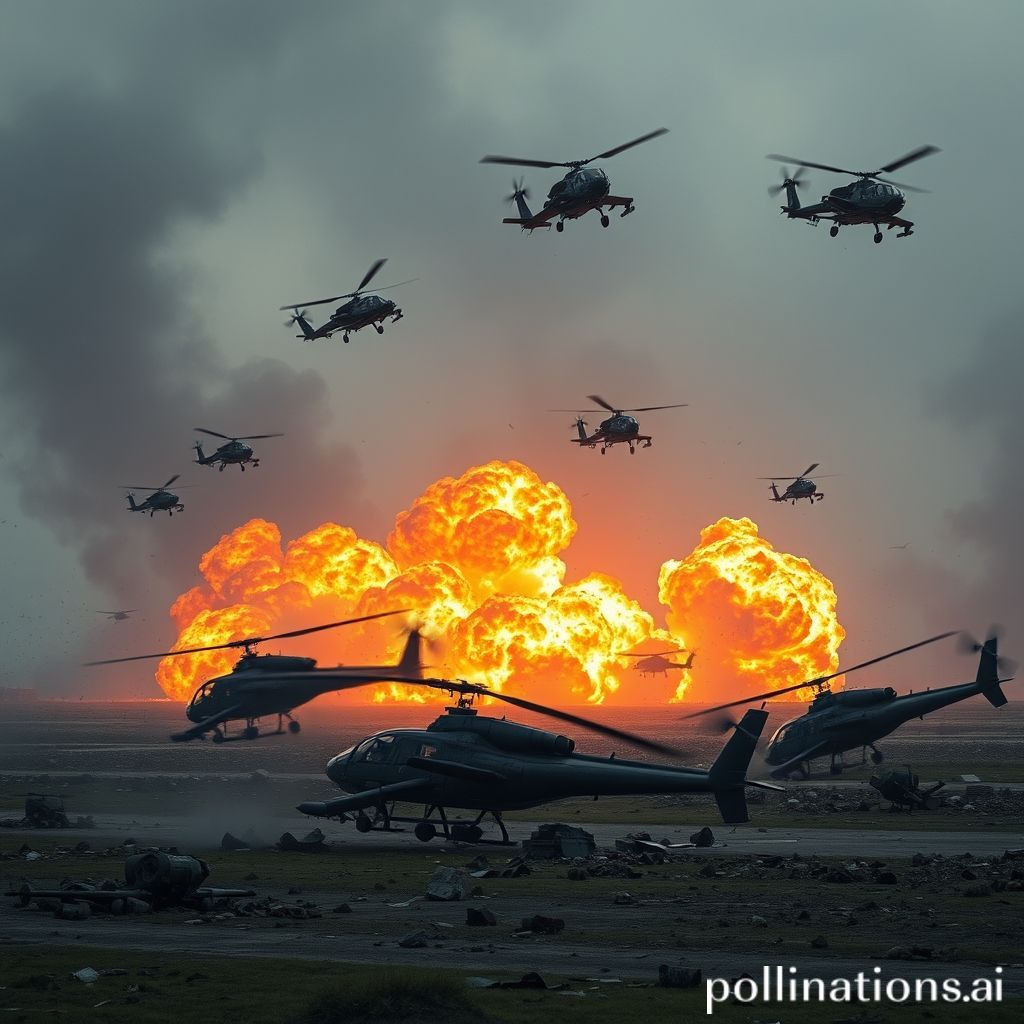
Ukraine destroys Russian helicopters in latest airfield drone strikes
Ukraine's Drone Strikes: A Blow to Russian Air Power
Hello everyone, and welcome to the blog. Today, we're diving deep into a developing story that highlights the ongoing ingenuity and resilience of Ukraine's military capabilities. Recent reports confirm that Ukraine has successfully conducted a series of drone strikes targeting Russian airfields, resulting in significant damage to Russian helicopters and potentially disrupting their operational capacity. This isn't just another headline; it's a demonstration of evolving warfare tactics and a significant strategic play in the conflict.
Airfield Attacks: Details Emerge
Over the past few weeks, multiple sources have reported explosions and fires at Russian airfields, specifically targeting helicopter assets. While initial reports were vague, concrete evidence, including satellite imagery and on-the-ground reports, has begun to paint a clearer picture. The attacks, attributed to Ukrainian drone strikes, appear to be meticulously planned and executed, suggesting a sophisticated understanding of Russian airfield layouts, security protocols, and the vulnerabilities of specific aircraft.
Specific Targets and Damage Assessment
The exact number of helicopters destroyed or damaged remains a subject of ongoing analysis, but initial reports suggest that several Ka 52 attack helicopters, a vital component of Russia's ground support operations, have been taken out of commission. These aren't just any helicopters; the Ka 52, often called the "Alligator," is a heavily armored and armed attack helicopter designed for reconnaissance and destroying tanks. Losing several of these assets could significantly impact Russia's ability to provide close air support to its ground forces, particularly in contested areas.
Beyond the Ka 52, other helicopter types may have been affected. The extent of the damage varies from airfield to airfield, but the cumulative effect is undeniable: a tangible reduction in Russia's air power in the region. These strikes highlight a potential shift in the balance of power, or at least the perception of it, on the battlefield.
Ukraine's Drone Capabilities: An Asymmetric Advantage
The success of these drone strikes raises crucial questions about Ukraine's evolving drone capabilities. While the exact models used remain undisclosed for strategic reasons, it's clear that Ukraine is leveraging both commercially available drones modified for military use and indigenously developed systems. This blended approach allows for flexibility, affordability, and a constant adaptation to the evolving challenges of electronic warfare and countermeasures.
The use of drones offers Ukraine several key advantages:
Cost effectiveness: Drones are significantly cheaper to operate and replace than manned aircraft.
Risk mitigation: They reduce the risk to Ukrainian pilots.
Surveillance and reconnaissance: Drones provide real time intelligence, vital for targeting and assessing damage.
Precision strikes: Drones can deliver precision strikes, minimizing collateral damage.
Strategic Implications and the Wider Conflict
The drone strikes have significant strategic implications. Firstly, they demonstrate Ukraine's ability to strike deep within Russian controlled territory, challenging the perception of Russia's unassailable air defenses. Secondly, they force Russia to expend resources on defending its airfields, diverting attention and assets from other critical areas of the front line. Finally, they serve as a morale booster for Ukrainian forces and the civilian population, showcasing the country's continued resistance and innovation.
Comparing the Drone Strikes: A Table
To better understand the impact, let's compare these strikes to other notable moments in the conflict.
| Factor | Recent Drone Strikes | Previous Airfield Attacks (e.g., Saky Air Base) |
| | | |
| Targeting | Primarily helicopters | Primarily fighter jets and ammunition depots |
| Precision | High, suggesting targeted strikes | Varied, some suggesting less precision |
| Strategic Impact | Impacts close air support capabilities | Impacts air superiority and logistical support |
| Overall Effect | Reduces Russia's immediate battlefield advantage | Creates longer term logistical and strategic challenges |
Future Outlook and the Changing Face of Warfare
The use of drones in this conflict highlights the changing face of modern warfare. Drones are no longer just reconnaissance tools; they are becoming increasingly integral to offensive operations, blurring the lines between traditional air power and ground based attacks. As drone technology continues to evolve, we can expect to see even more innovative applications on the battlefield, challenging conventional military doctrines and forcing militaries worldwide to adapt.
These strikes are a testament to the resourcefulness of the Ukrainian military. They highlight their ability to not only defend their territory but also proactively disrupt Russian operations using innovative and cost effective methods. While the conflict is far from over, these drone strikes serve as a reminder that Ukraine is not just passively resisting; it is actively shaping the course of the war.
My own reflection on this situation circles back to the incredible human spirit. Amidst immense challenges, we see innovation, adaptation, and unwavering resolve. It's a poignant reminder that even in the darkest of times, ingenuity and determination can offer a powerful counterweight. The drone strikes are more than just military tactics; they are a symbol of a nation fighting for its survival, and its future.
Sources:
Various news reports and analysis from reputable media outlets including but not limited to: The Kyiv Independent, Reuters, Associated Press, and The Institute for the Study of War.
Soratemplates is a blogger resources site is a provider of high quality blogger template with premium looking layout and robust design


0 Comments:
Post a Comment