
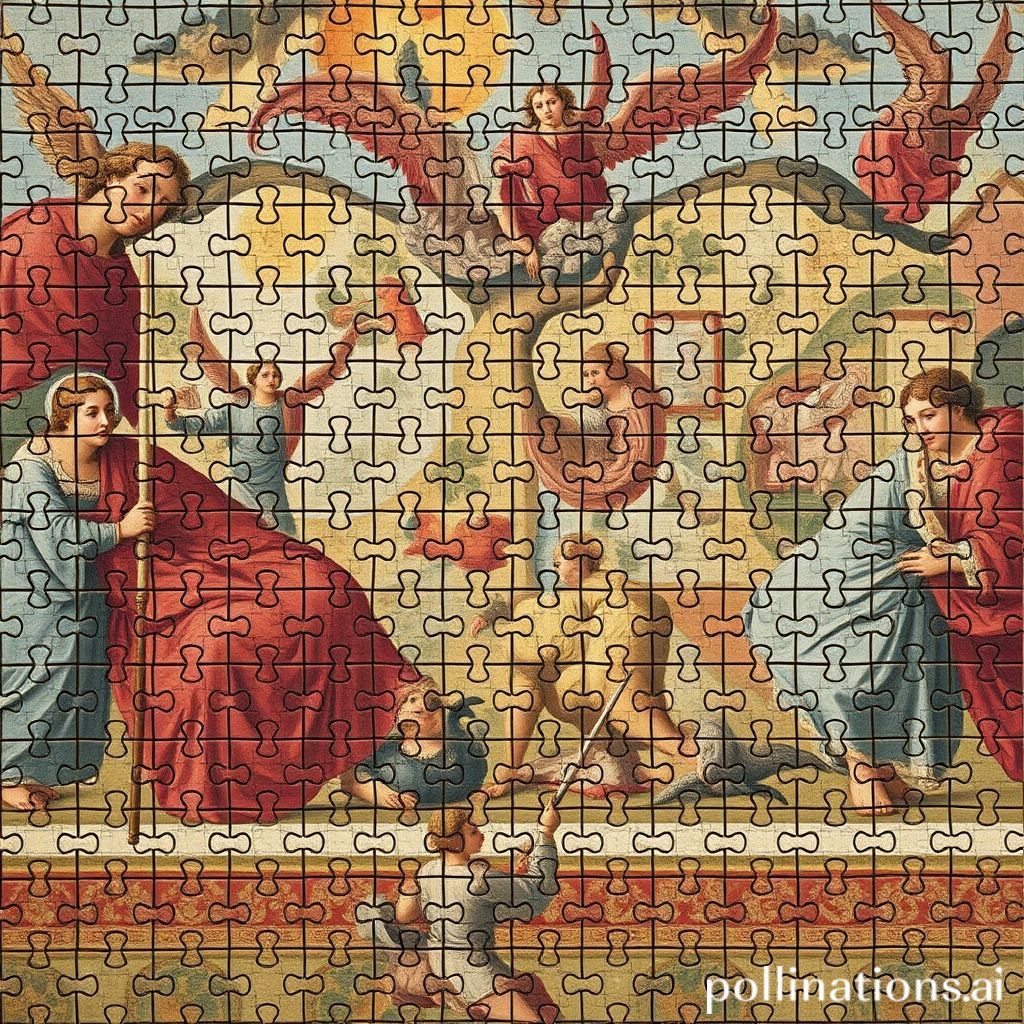
Now THAT jigsaw wasn't built in a day! Experts recreate Roman frescoes from thousands of fragments
Now THAT Jigsaw Wasn't Built in a Day! Experts Recreate Roman Frescoes from Thousands of Fragments
Have you ever spent hours, maybe even days, meticulously piecing together a challenging jigsaw puzzle? Imagine that, but instead of a picturesque landscape, you're dealing with fragments of ancient Roman frescoes, some no bigger than a fingernail, and there are thousands of them. That s the daunting, yet incredibly rewarding, task facing archaeologists and conservators working to reconstruct these invaluable glimpses into the past.
Unearthing History, Piece by Piece
Roman frescoes, vibrant paintings applied directly to wet plaster walls, were a common feature in homes and public buildings across the Roman Empire. They offer us a fascinating window into Roman life, art, mythology, and interior design. However, time, natural disasters, and human activity have often left these artworks in a severely fragmented state. Think volcanic eruptions burying Pompeii, earthquakes shaking foundations, or simply the slow decay of materials over centuries.
The challenge is immense. Each fragment, dislodged from its original context, becomes a tiny piece of a colossal puzzle. The colors may have faded, the plaster crumbled, and the original design lost to time. Yet, through painstaking effort and innovative techniques, experts are bringing these lost masterpieces back to life.
The Detective Work Begins
Reconstructing a Roman fresco is far more than just sticking pieces together. It's a meticulous process that blends archaeology, art history, conservation science, and a healthy dose of detective work.
The first step involves carefully documenting and categorizing each fragment. This includes recording its size, shape, color, the type of plaster used, and any discernible details of the painted image. Sophisticated imaging techniques, such as digital photography and 3D scanning, are employed to create detailed records of each piece. Think of it as creating a digital inventory of all the puzzle pieces.
Matching Colors, Connecting Styles
Once the fragments are documented, the real puzzle-solving begins. Experts analyze the painting style, the pigments used, and the subjects depicted to identify potential matches. They might look for recurring patterns, similar brushstrokes, or fragments that appear to belong to the same figure or scene. Color matching is crucial, but it's complicated by the fact that pigments can change over time due to environmental factors.
Comparisons with other known Roman frescoes are also essential. By studying similar artworks, researchers can gain insights into the conventions of Roman painting, identify mythological figures, and understand the overall composition of the original fresco.
Technological Assistance: A Modern Twist
In recent years, technology has revolutionized the process of fresco reconstruction. Computer algorithms can now analyze the shape, color, and texture of fragments to suggest potential matches. These algorithms aren't perfect, of course, but they can significantly speed up the process by narrowing down the possibilities and identifying connections that human eyes might miss.
3D modeling and virtual reality are also playing an increasingly important role. Researchers can create virtual reconstructions of frescoes, allowing them to experiment with different arrangements of fragments and visualize the artwork in its original context. This is especially helpful when dealing with large numbers of fragments or when the original location of the fresco is uncertain.
Ethical Considerations: Respecting the Past
Reconstructing Roman frescoes is not just about recreating an image; it's about preserving cultural heritage. Conservators are acutely aware of the ethical considerations involved in this work. They strive to use reversible materials and techniques, so that future generations can re-examine and reinterpret the reconstructions.
Any interventions must be carefully documented and justified. The goal is to reveal the original artwork as accurately as possible, while also acknowledging the gaps in our knowledge and respecting the integrity of the remaining fragments.
Comparing the Process
| Feature | Jigsaw Puzzle (Modern) | Roman Fresco Reconstruction |
||||
| Objective | Complete the Image | Reconstruct Art and History |
| Pieces | Pre-cut, Uniform | Fragmented, Varied |
| Guiding Information | Box Image | Historical, Artistic Knowledge |
| Tools | Fingers | Digital Imaging, Algorithms |
| Time Scale | Hours/Days | Months/Years |
| Material Integrity | New, Stable | Ancient, Fragile |
A Reflection on Time and Patience
The reconstruction of Roman frescoes is a testament to human ingenuity, patience, and our enduring fascination with the past. It reminds us that even the most fragmented remains can hold profound stories, waiting to be uncovered. These experts are not just piecing together artwork; they're piecing together history, culture, and the lives of people who lived thousands of years ago. It's a powerful reminder that even from the smallest pieces, we can gain a glimpse into the grand tapestry of human civilization. It makes you wonder what stories are lying dormant, waiting for someone with enough curiosity and dedication to uncover them. Perhaps you have a similar jigsaw waiting to be completed in your own life.
Sources
Archaeological Institutes, Archaeological Projects.
Journal of Archaeological Science
Art History Journals
Soratemplates is a blogger resources site is a provider of high quality blogger template with premium looking layout and robust design


0 Comments:
Post a Comment