
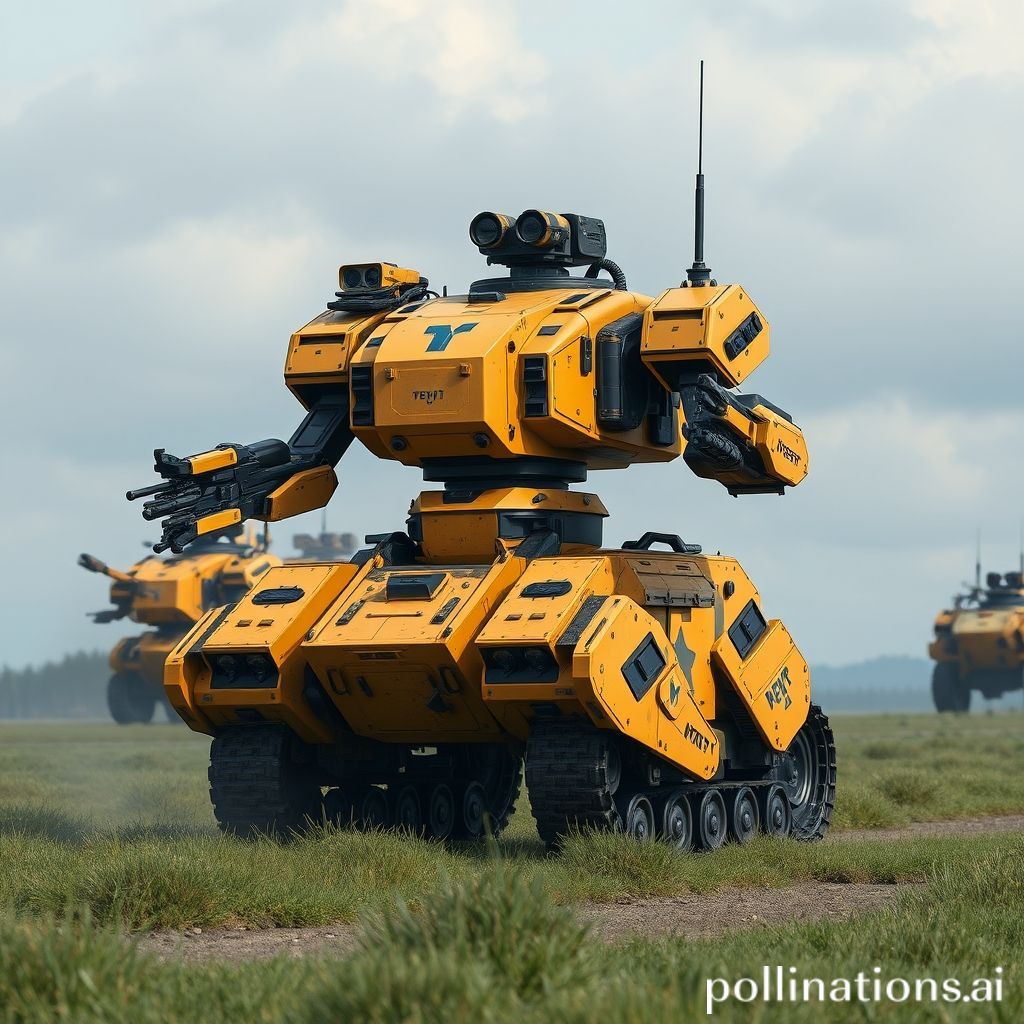
A company on Russia's doorstep that sent its war robots to Ukraine got a crash course in what soldiers need
War Robots on the Front Lines: A Finnish Company's Ukrainian Education
Hey there, tech enthusiasts and defense aficionados! Ever wonder how cutting edge technology fares when it meets the brutal reality of war? Today, we are diving deep into a fascinating case study involving a Finnish company, Milrem Robotics, and their experiences deploying war robots in the Ukrainian conflict. It is a story of innovation, adaptation, and the harsh lessons learned on the battlefield.
Milrem Robotics: Pioneers in Unmanned Ground Vehicles
Milrem Robotics, based in Estonia, right on Russia's doorstep, has been making waves in the world of unmanned ground vehicles UGVs for years. Their THeMIS platform, a modular and versatile UGV, has garnered international attention for its potential to revolutionize military logistics, reconnaissance, and even direct combat support. But theoretical capabilities are one thing; real world performance under fire is another.
Ukraine: The Ultimate Testing Ground
When the war in Ukraine erupted, Milrem saw an opportunity to put their technology to the ultimate test. They sent several THeMIS UGVs to assist Ukrainian forces, primarily in logistical roles. The initial promise was compelling: reduce risk to soldiers, transport supplies to the front lines, and evacuate wounded personnel. However, the realities of the Ukrainian battlefield quickly presented a steep learning curve.
Early Hopes and Initial Deployment
The initial deployment of THeMIS focused on its strengths: carrying supplies like ammunition, food, and water to forward positions. The idea was to minimize the number of soldiers exposed to enemy fire during resupply missions. In theory, this seemed like a perfect fit.
The Harsh Realities of War
The Ukrainian landscape, however, is far from a controlled laboratory environment. Mud, uneven terrain, and constant shelling presented significant challenges.
| Challenge | Impact on UGV Performance | Solution(s) Implemented |
||||
| Mud and Terrain | Reduced mobility, frequent breakdowns | Improved track design, more powerful motors |
| Electronic Warfare | Communication jamming, loss of control | Enhanced encryption, redundant communication systems |
| Lack of Real time Data | Limited situational awareness | Integration of advanced sensors and cameras |
| Maintenance and Repair | Difficulty in field repairs | Remote diagnostics, improved training for local technicians |
The mud, in particular, proved to be a major obstacle. The THeMIS, while robust, was not initially designed to navigate the deep, sticky mud that characterizes much of the Ukrainian countryside. This led to frequent breakdowns and bogged down vehicles.
Another significant challenge was electronic warfare. Russian forces are adept at jamming communication signals, making it difficult to remotely control the UGVs. This resulted in loss of control and rendered the robots vulnerable.
Adaptation and Innovation on the Fly
Milrem engineers quickly realized that they needed to adapt their technology to the specific demands of the Ukrainian battlefield. They began working on improvements to the THeMIS, focusing on mobility, communication resilience, and ease of repair.
To address the mud problem, they redesigned the tracks to provide better grip and traction. They also increased the power of the motors to overcome the increased resistance.
To counter electronic warfare, they implemented enhanced encryption and redundant communication systems. This made it more difficult for Russian forces to jam the signals and disrupt control of the UGVs.
Perhaps most importantly, Milrem focused on improving the maintainability of the THeMIS. They developed remote diagnostics tools that allowed technicians to troubleshoot problems from afar. They also provided extensive training to Ukrainian soldiers on how to repair and maintain the UGVs in the field.
The Human Factor: A Crucial Component
Beyond the technological challenges, Milrem also learned valuable lessons about the human element of warfare. They discovered that soldiers needed to trust the technology and be properly trained on how to use it effectively.
Early on, some soldiers were hesitant to rely on the UGVs, preferring to stick with traditional methods of resupply. This was partly due to a lack of familiarity with the technology and partly due to concerns about its reliability.
To overcome this resistance, Milrem worked closely with Ukrainian forces to provide hands on training and demonstrate the capabilities of the THeMIS. They also solicited feedback from soldiers and incorporated their suggestions into the design and operation of the UGVs.
Lessons Learned and the Future of War Robots
Milrem's experience in Ukraine has provided invaluable insights into the use of war robots on the modern battlefield. It has highlighted the importance of adaptability, resilience, and the human factor.
The company has emerged from this experience with a deeper understanding of what it takes to build effective and reliable war robots. They are now incorporating these lessons into their future designs, focusing on features like improved mobility, enhanced communication, and ease of maintenance.
A Personal Reflection
The story of Milrem Robotics in Ukraine is a testament to the power of innovation and the importance of learning from experience. It demonstrates that even the most advanced technology is only as good as the people who use it and the environment in which it is deployed.
As we move further into an era of increasingly automated warfare, it is crucial that we continue to learn from these real world examples and ensure that technology serves humanity, rather than the other way around. The future of war is undoubtedly changing, and companies like Milrem are on the front lines, shaping that future.
Sources:
Defense News Articles, Milrem Robotics Official Website, Open Source Intelligence Reports on the War in Ukraine.
Soratemplates is a blogger resources site is a provider of high quality blogger template with premium looking layout and robust design


0 Comments:
Post a Comment